
Ed Griesbaum Remembered
Click Here to link to Ed’s Obituary and Funeral Services Details
Life Story Videos
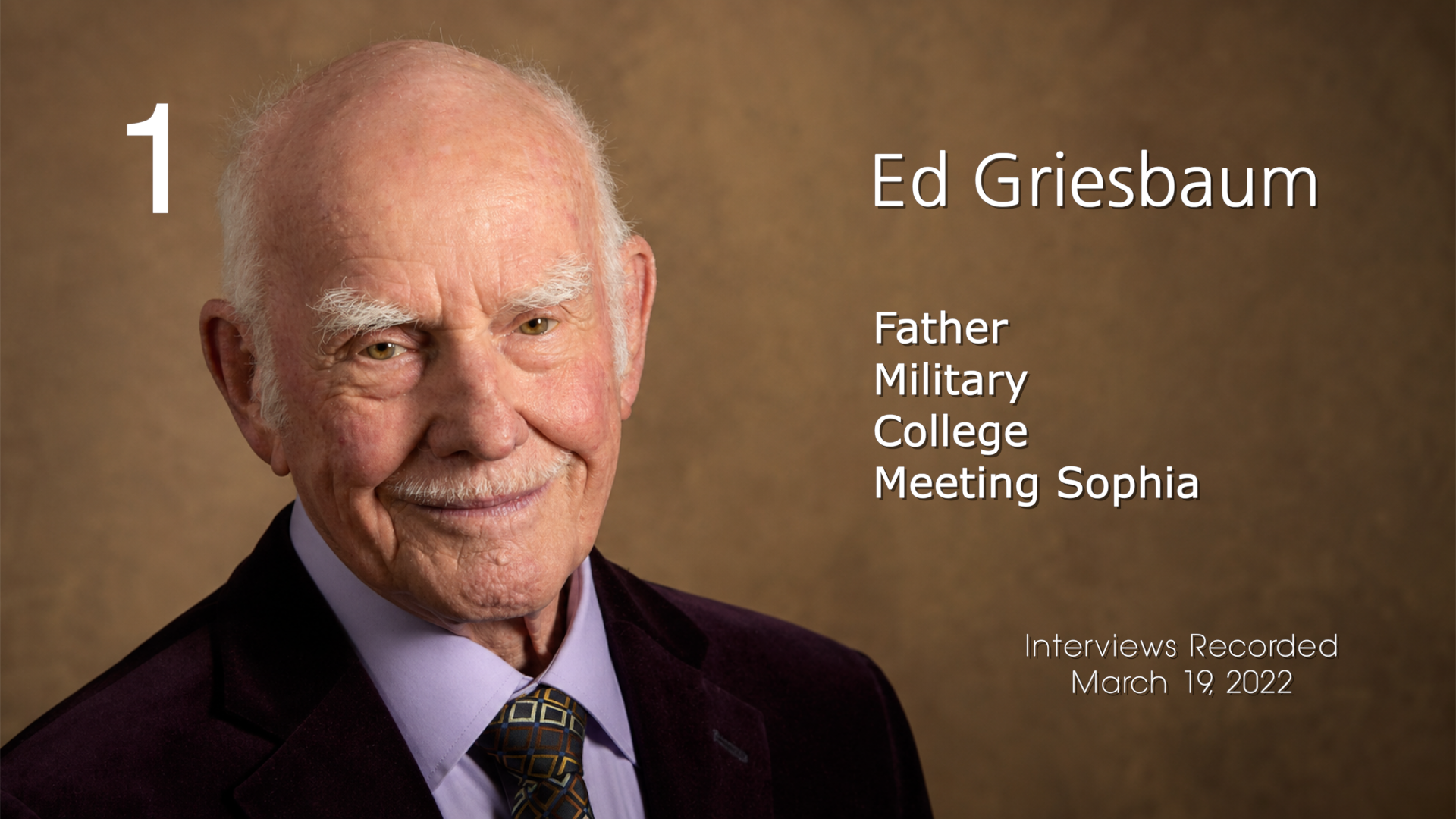
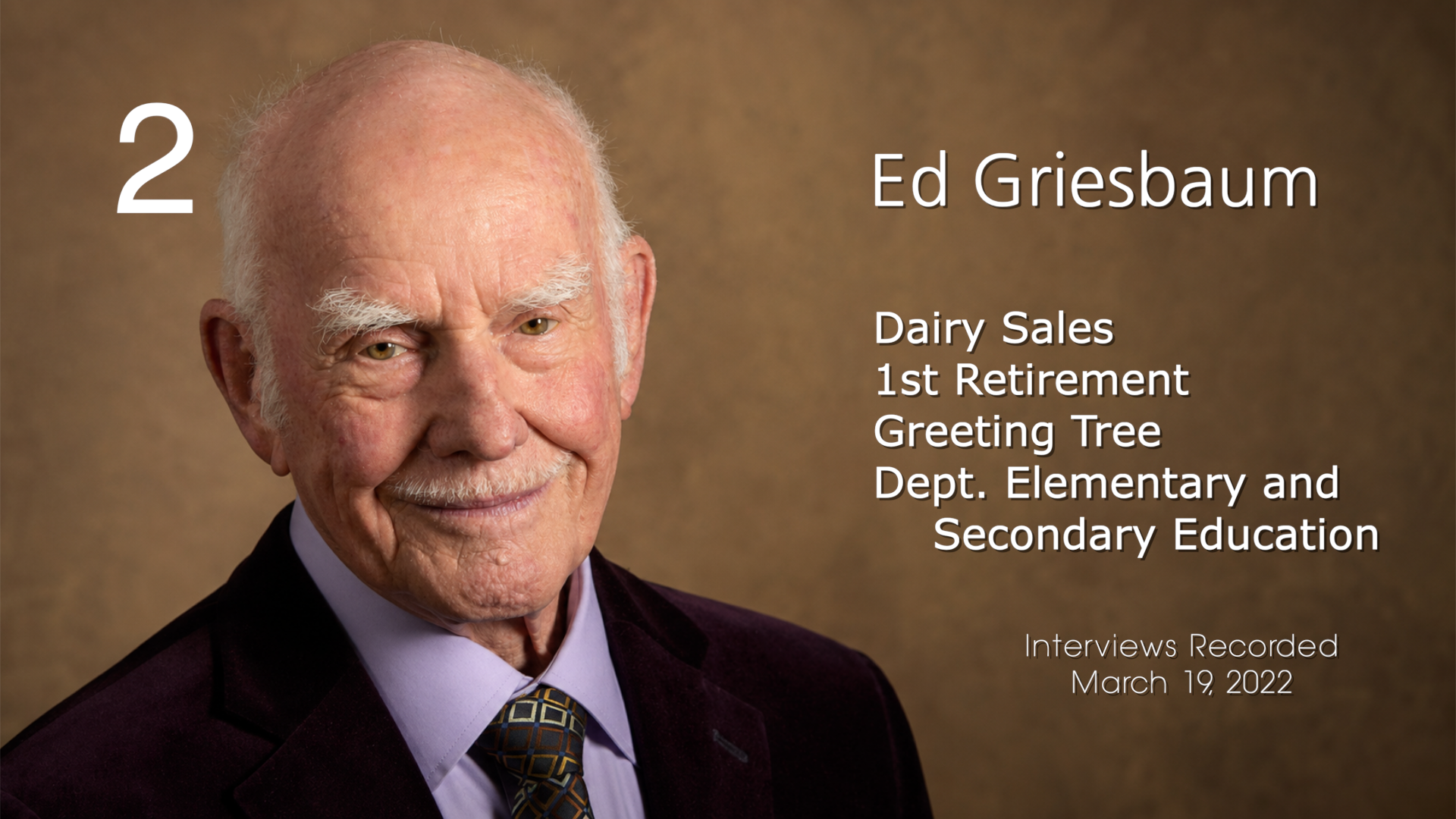
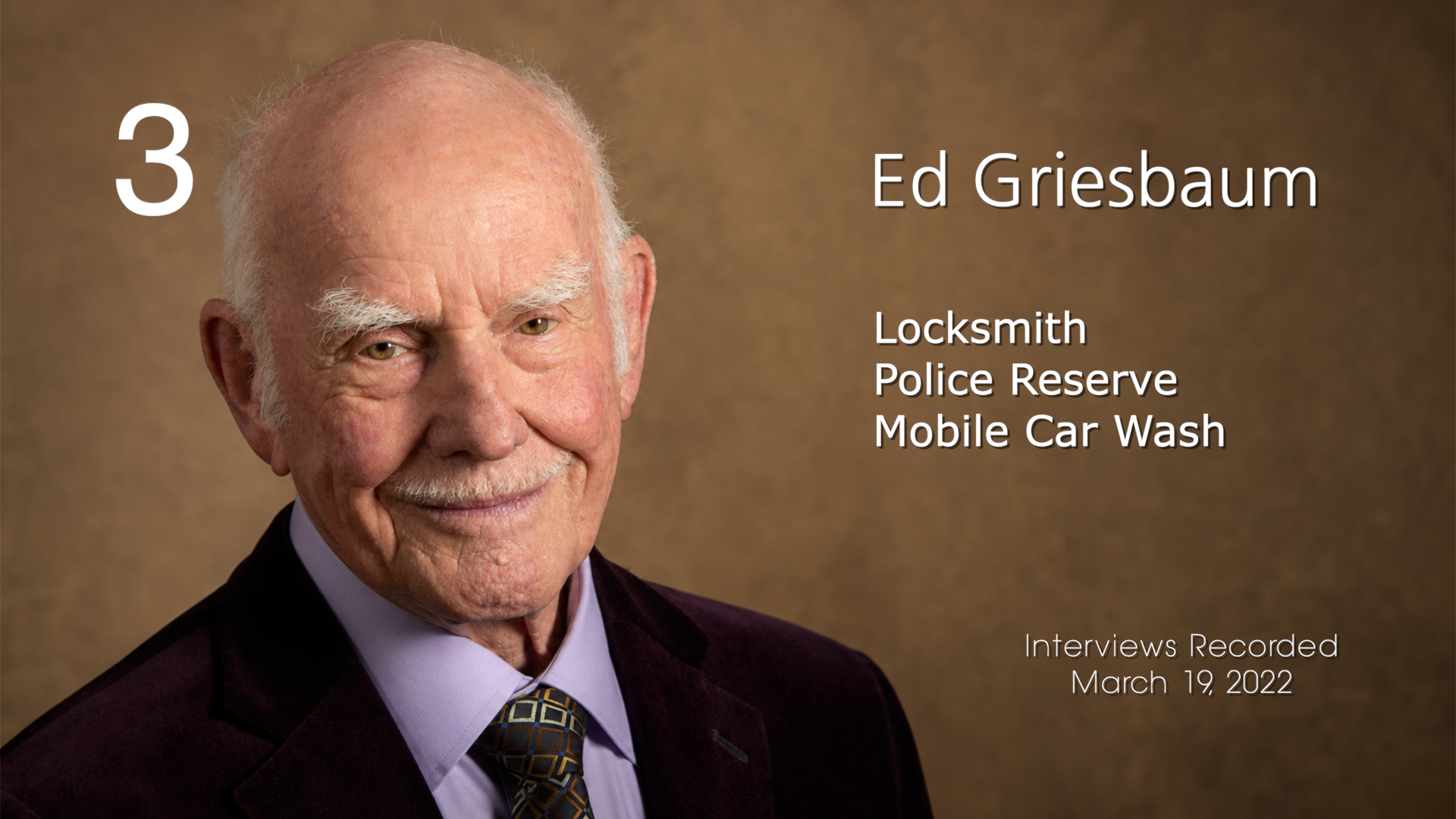
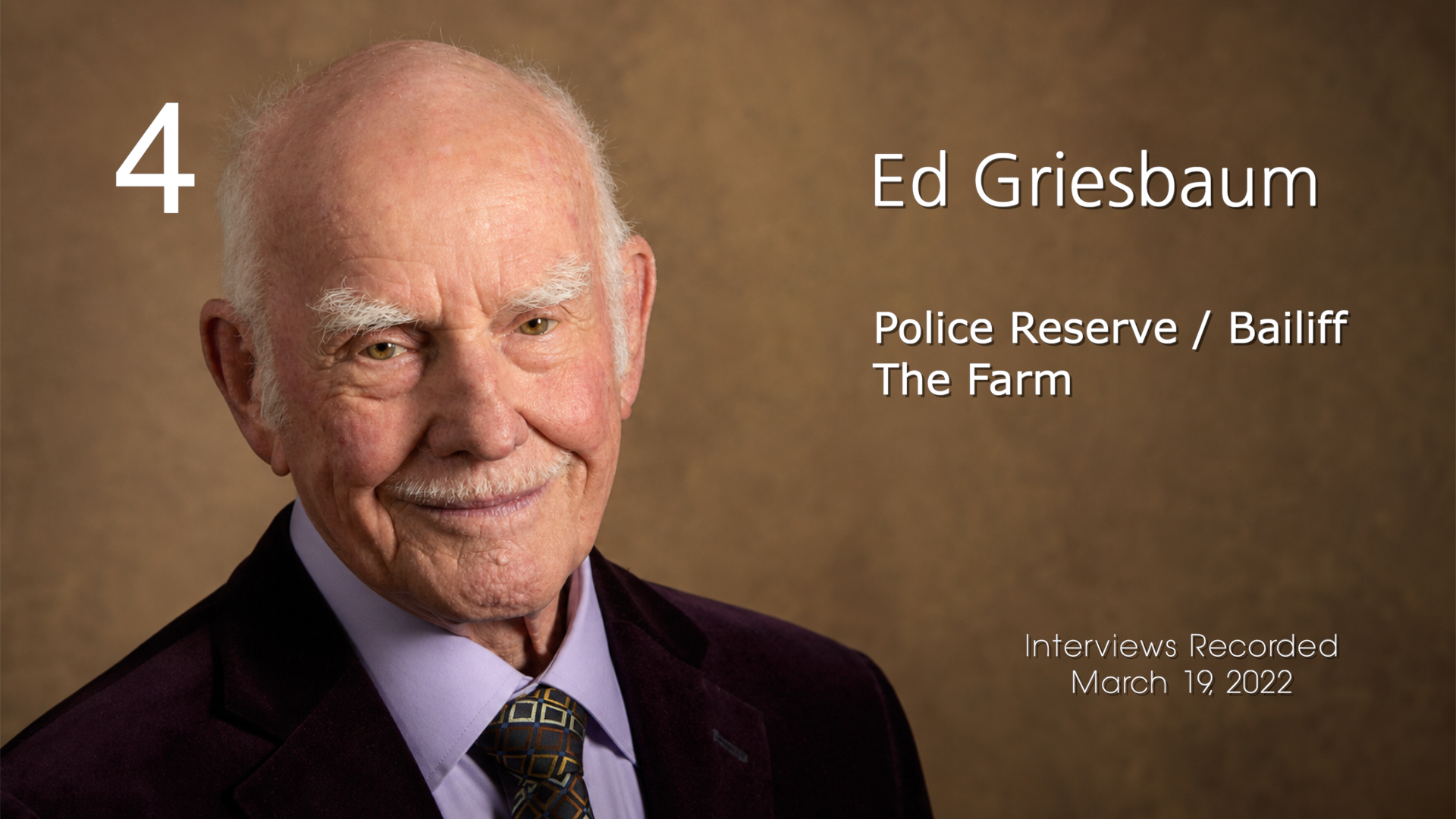
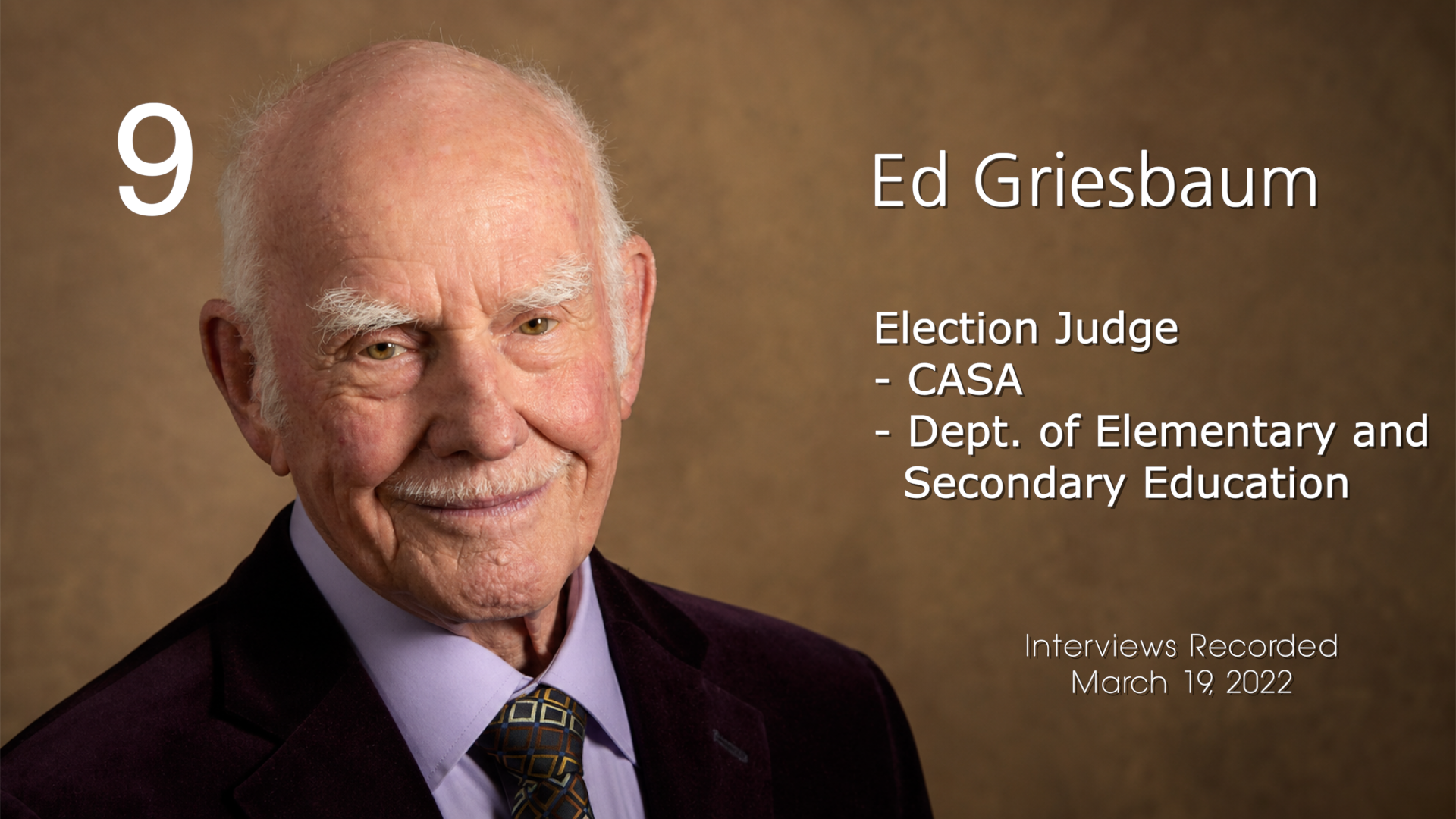
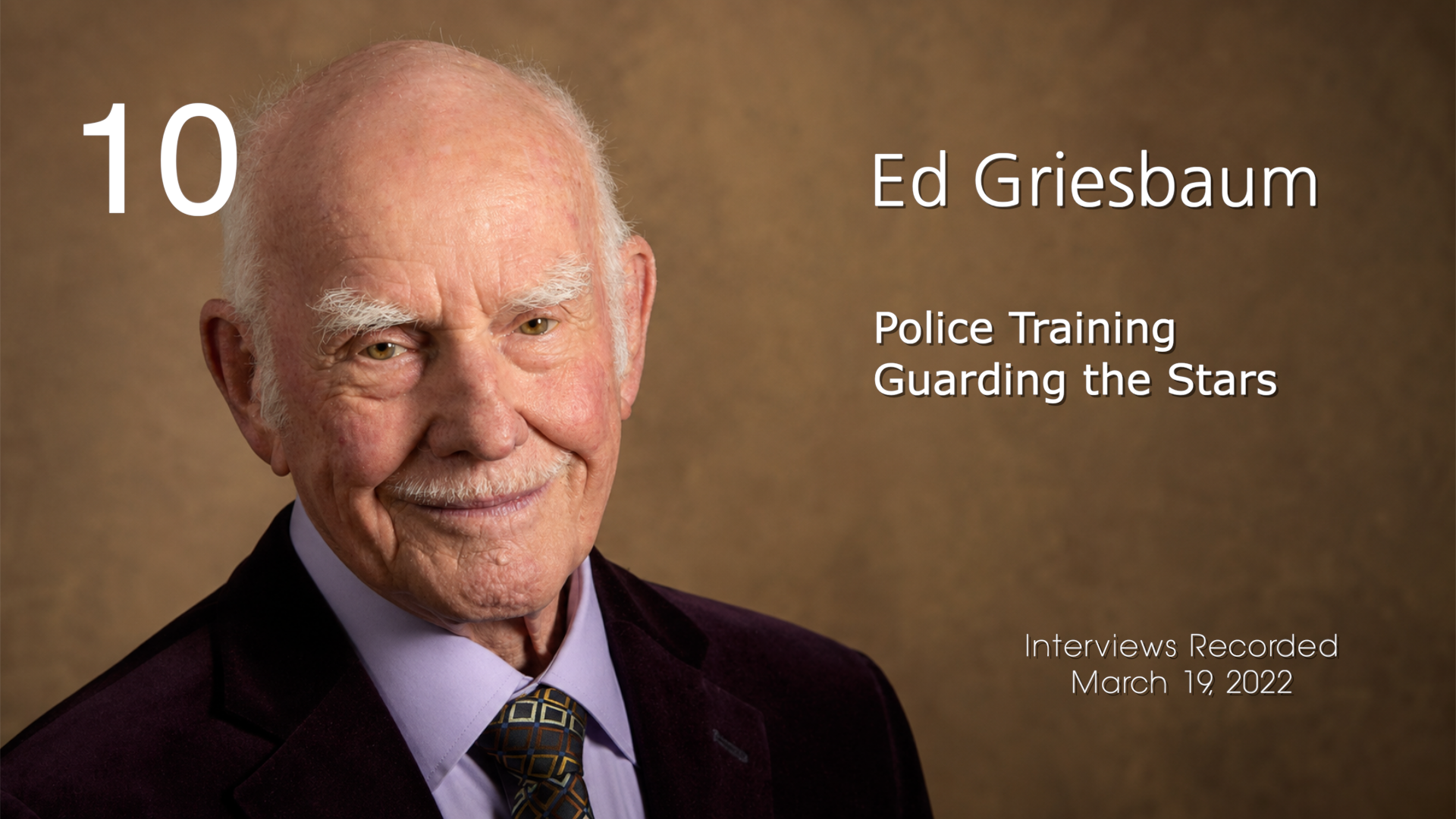
These interviews were recorded March 19, 2022, when Ed was 94 years old. They preserve his stories as he remembered them—stories from a remarkable life filled with family, friendships, many different careers, hard work, service, and extraordinary generosity with both his time and resources. While the heart of these stories is true, some dates, names, and details had grown less precise with the passing years. These videos are best viewed not as a formal historical record, but as Ed’s own recollections of the people, places, and experiences that shaped his life.
Eulogy
When I married Cathy in 1982, I learned something that everyone who gets married eventually discovers: when you marry someone, you also marry their family.
In my case, I was incredibly fortunate.
From the very beginning, Ed and Sophia welcomed me into the Griesbaum family with warmth and love. I never felt like someone who had simply married their daughter. I felt like I had become part of their family.
And over the next 44 years, I had the privilege of getting to know a remarkable man.
Ed was an extremely intelligent person. He was curious. He was resourceful. He could figure things out. Throughout his life, he seemed to acquire new skills simply because something needed to be done and he decided he could learn how to do it.
After Cathy and I married and bought our first house, she wanted the piano her grandmother had given her—an old upright grand from the 1800s that was sitting in the basement of Ed and Sophia’s house. Ed decided he would bring it down to us in Texas.
Now, most people faced with getting an upright grand piano out of a basement would probably call a piano mover.
Not Ed.
He rigged up ropes and pulleys and chains—and who knows what else—and somehow managed to haul that enormous piano out of the basement and into his truck.
By himself.
That was Ed. If something needed to be done, he generally assumed there was a way to do it. He just had to figure out what that way was.
Ed served in the military. He sold dairy equipment. He worked for the Post Office. He served with the police reserve. He was a locksmith and a ham radio operator. He volunteered with CASA and as a surrogate parent. He helped with communications for events like the MS 150. And those are only a few examples of the things he did to fill his life.
But for all that Ed knew and all that he accomplished, he was an extraordinarily modest man.
And he was frugal.
Very frugal.
If you've watched the interviews I recorded with Ed, there is a wonderful example. Ed is sitting there telling us stories from his life, and one sleeve of his shirt is being held together with a safety pin.
Ed had the means to buy another shirt.
He apparently just didn't see any reason to.
Someone who didn't know him might have looked at that shirt and wondered about the circumstances of his life.
But those of us who knew Ed understood.
Fancy clothes didn't matter to him.
Expensive possessions didn't matter to him.
Having things simply for the purpose of having things didn't matter to him.
What mattered was what he could do for someone else.
That contrast tells you a great deal about Ed.
He might hold his own shirt together with a safety pin, yet he and Sophia quietly gave tens of thousands of dollars to help children and support education.
They gave generously to their church.
And when I say generously, I don't mean simply putting a little extra in the collection plate.
Over the years, they saw what was needed and helped make it happen.
They purchased the large eight-foot round tables the church needed.
They provided funding for the porte-cochère—the covered walkway between the church and the parking area.
They helped refurbish the rectory, including windows, flooring and a three-car garage.
They helped with repairs to the Virgin Mary prayer garden.
And they established an endowment to the school to help families who otherwise might not be able to afford the education they wanted for their children.
But the important thing about that list isn't the list itself.
It's that most people never knew about it.
Ed and Sophia weren't interested in having their names displayed somewhere. They weren't looking for recognition.
They simply saw a need and tried to meet it.
That generosity wasn't limited to money, either.
They gave their time.
Ed volunteered throughout his life. He donated blood year after year. He helped children. He served his community. He served his church. He helped wherever he believed he could be useful.
I think one of the best descriptions of Ed is that he had a servant's heart.
And there was perhaps no better example of that heart than the way he loved Sophia.
Their marriage lasted more than 70 years.
Many stories could be told about that marriage, but one of my favorites comes from the sunset of Sophia's life.
Sophia was at Springfield Rehab. Ed wasn't exactly very mobile himself by then, but somehow, every day, he found a way to make the trip across the street to be with her.
Ed would arrive on his motorized scooter.
Sophia would be in her wheelchair.
And they would sit together in the hallway near the nurses' station.
Day after day, there they were.
Two people who had spent a lifetime together and who still simply wanted to be beside one another.
The nurses noticed.
Eventually, they gave that particular section of hallway a name.
They called it Lovers Lane.
Another story from that same time says something about the way Ed approached life.
One cold, windy winter day, Ed set out on his scooter to make that same trip across the street to see Sophia. To get to the rehab center, he had to climb a short hill. It wasn't much of a hill, but on that particular day, between the wind, the cold and the climb, the scooter battery finally gave out.
Ed made it about halfway up the hill and stopped.
What we later learned was that people at The Gardens, where Ed lived, and people at Springfield Rehab, where Sophia was staying, had gotten used to watching him from their windows as he made that trip every day.
So when Ed suddenly stopped halfway up the hill, people on both sides noticed.
The alarm went out.
Within moments, people were running from both buildings to help him.
And when they reached him, they found Ed sitting there on his dead scooter, stuck on the side of the hill in the winter wind.
And he was laughing.
He wasn't angry.
He wasn't complaining.
He was simply amused by the predicament he had gotten himself into.
That was Ed.
Even when life left him stranded halfway up a hill, he could find something to laugh about.
I can't think of a much better tribute to a marriage than Lovers Lane.
Or a much better picture of Ed than that day on the hill.
After all those decades, after raising a family, after all the ordinary days and difficult days and wonderful days that make up a life together, Ed was still making his way across the street because Sophia was there.
That kind of love teaches the rest of us something.
So does the way Ed lived the rest of his life.
He showed us that intelligence doesn't require you to show everyone how smart you are.
That having the means to live extravagantly doesn't mean you have to.
That generosity doesn't require recognition.
That service doesn't have to be something grand.
Sometimes it means giving money.
Sometimes it means giving blood.
Sometimes it means volunteering your time.
Sometimes it means fixing something that needs fixing.
And sometimes it means climbing onto a motorized scooter and making your way across the street because the person you've loved for more than 70 years is waiting for you.
Ed lived for 100 years.
It's difficult even to comprehend everything contained in a life that long—the changes he witnessed, the people he knew, the work he did, the stories he accumulated, and the lives he touched.
But I don't think Ed's life is best measured in years.
I think it's measured in people.
In his children.
His grandchildren.
His great-grandchildren.
His church.
The children who received an education because someone quietly helped make it possible.
The people who benefited from the countless hours he volunteered.
And all of us who were fortunate enough to have him as part of our lives.
And that's why, although today we say goodbye to Ed, in another sense, I don't think Ed is gone at all.
I can hear him in Ted or Drew's laughter.
I can hear him in the stories that Chris tells.
There are expressions, mannerisms, stories, and little pieces of Ed scattered throughout this family.
They will be with us for generations.
Forty-four years ago, I married into the Griesbaum family.
I didn't know then what an extraordinary gift that would turn out to be.
Ed and Sophia welcomed me into a family built around love, faith, generosity, and service.
And I will always be grateful for that.
Ed lived a very long life.
But far more importantly, he lived a very good one.
And I think all of us who knew him are a little better because he was here.